Nikon Europe B.V. | Europe & Africa
- en Change Region
- Global Site
In Belgium — a country known for its highly developed healthcare system within Europe — the CHIREC (Centre Hospitalier Interrégional Edith Cavell) Hospital Group is committed to advancing comprehensive and innovative medical care across a wide range of disciplines.
Belgium is also recognized as the birthplace of ICSI (Intracytoplasmic Sperm Injection), where the world’s first successful procedure was performed.* Building on this spirit of innovation, CHIREC’s IVF (in vitro fertilization) laboratory is dedicated to providing sophisticated and personalized fertility treatments tailored to each patient.
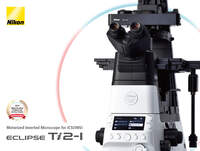
Now, Nikon’s motorized inverted microscope ECLIPSE Ti2-I, designed for ICSI/IMSI procedures, is poised to bring new possibilities in this clinical setting.
We spoke with Dr. David Jareño Martínez, Senior Embryologist at CHIREC’s IVF laboratory for over 16 years, about his impressions of the microscope’s optical performance, automation functions, and the potential impact these may have on treatment outcomes.
* The world’s first ICSI procedure was successfully performed at UZ Brussel.
https://brusselsmorning.com/thirty-years-ago-the-very-first-icsi-baby-was-born-in-uz-brussel/20731/
Disclaimer: This article includes comments from healthcare professionals regarding Nikon products. These comments do not constitute a guarantee of the products’ efficacy, performance, or results.
Furthermore, they do not imply that the healthcare professionals endorse, recommend, supervise, or preferentially select Nikon products.
CHIREC (Centre Hospitalier Interrégional Edith Cavell) is a hospital group established in 2000 through the integration of Brussel-based hospitals and clinics, with its roots in the Edith Cavell Clinic, founded in 1923 in Brussels.
Edith Cavell, who taught at a nursing school, played a key role in laying the foundations of modern nursing in Belgium. She is internationally recognized for her courage and compassion during World War I, when she devoted herself to saving the lives of soldiers from both the Allied and German sides, without discrimination.
Carrying forward her humanitarian spirit of saving every precious life equally, CHIREC upholds a philosophy of caring for all patients with respect for each individual’s beliefs and cultural background.
To achieve this, CHIREC covers a wide spectrum of highly specialized medical fields and combines advanced technologies with close collaboration among physicians, nurses, and technicians. Together, they strive to provide gentle yet sophisticated medical care — enveloping each patient in a “cocoon” of compassion and expertise.
Within CHIREC, the IVF laboratory at Braine-l’Alleud Hospital is dedicated to helping more patients realize their hopes through advanced fertility treatments led by highly experienced embryologists.
In this clinical setting, various Nikon microscopes play an important role.
The ECLIPSE Ti2-I, Nikon’s motorized inverted microscope for ICSI/IMSI* procedures, brings the possibility of enhancing treatment quality through automation of microscope settings — a significant advancement in a field that demands exceptional skill and experience.
We spoke with Dr. David Jareño Martínez, Senior Embryologist at CHIREC’s IVF laboratory and board member of the Belgian Society for Reproductive Medicine (BSRM), who shared his expectations and perspectives.
*ICSI (Intracytoplasmic Sperm Injection) is a procedure in which a single sperm is directly injected into an oocyte under a microscope.
IMSI (Intracytoplasmic Morphologically Selected Sperm Injection) is a specialized form of ICSI that selects sperm based on their morphology before injection.
Located about 20 kilometers south of Brussels, Braine-l’Alleud Hospital serves as a general hospital, and its IVF laboratory plays a central role in CHIREC’s reproductive medicine program.
Equipped with state-of-the-art facilities and operating under a strict quality management system, the laboratory ensures the highest standards of safety and reliability.
Within this lab, embryologists perform IMSI (Intracytoplasmic Morphologically Selected Sperm Injection) — a specialized form of ICSI (Intracytoplasmic Sperm Injection) that involves selecting morphologically optimal sperm before injection into the oocyte.
Because IMSI requires observing sperm at magnifications of several hundred times, it demands precise microscope adjustments and highly delicate operations. These factors, however, may significantly contribute to improving outcomes in fertility treatment.
“Many of our patients have already undergone fertility treatments at other medical institutions without achieving the desired results,” says Dr. David Jareño Martínez.
“That is why we believe strongly in providing an individualized approach tailored to each patient’s situation. IMSI is one important part of that approach, and CHIREC is among the few institutions where IMSI is offered as a regular treatment option.”
― What advantages does the ECLIPSE Ti2-I offer in your IVF laboratory?
Dr. Martínez:
“In our practice, we constantly strive to optimize medical strategies and technologies according to the specific characteristics and needs of each patient.
To do so, it is essential to carefully evaluate every couple’s medical background and the quality of their gametes — both sperm and oocytes.
In this context, the ECLIPSE Ti2-I plays a crucial role.
Its outstanding optical performance enables clear, high-magnification observation, which allows for more precise sperm selection during IMSI.
This, in turn, can lead to improvements in embryo quality and, ultimately, to more successful fertility treatment outcomes.”
― How does the microscope’s automation feature contribute to workflow efficiency?
Dr. Martínez:
“When it comes to streamlining the ICSI workflow, I believe the greatest strength of the ECLIPSE Ti2-I lies in its automation capabilities.
With a single touch, the system automatically adjusts illumination, analyzers, and condensers when switching objectives lens — tasks that are otherwise repetitive and time-consuming.
This not only reduces fatigue but also allows embryologists to focus more on biological and clinical decision-making, rather than mechanical operation.
As a result, we can potentially increase the number of ICSI procedures performed per day while maintaining the high quality of embryos.”
― What are the cost and operational benefits for medical institutions?
Dr. Martínez:
“For any healthcare institution, the cost-performance balance of its equipment is just as important as technical excellence.
The ECLIPSE Ti2-I is designed as an all-in-one microscope with built-in automation features, which helps reduce total costs compared to systems that require additional automation modules in the future.
In the long term, it also offers high returns through greater efficiency, reproducibility, and improved treatment outcomes.
From that perspective, investing in such advanced technology is both rational and forward-looking.”
― How would you describe your own experience using the ECLIPSE Ti2-I?
Dr. Martínez:
“I was genuinely impressed by the ECLIPSE Ti2-I microscope.
It is ergonomically designed, remarkably intuitive, and easy to use even for first-time users.
The automation features significantly simplify operations, reducing the complexity of manual adjustments.
Its optical system provides consistently clear visibility, ensuring precision throughout every procedure.
In short, the ECLIPSE Ti2-I is a highly reliable microscope that combines exceptional performance and functionality with smooth, intuitive operation.”
― From the patient’s perspective, what benefits can the ECLIPSE Ti2-I bring?
Dr. Martínez:
“Based on my experience, the time required for sperm selection and injection during IMSI using the Ti2-I is approximately one-third that of a fully manual microscope. This reduction in operation time is highly significant.
It means that the patient’s precious oocytes are exposed for a much shorter period to suboptimal environmental conditions — such as high oxygen and low carbon dioxide levels — which can cause cellular stress.
As a result, oocyte viability is better preserved, ultimately leading to improvements in fertilization rates and embryo development.
This represents a major benefit for patients.”
Dr. Martínez shared his vision for the future:
“Since its beginnings, in vitro fertilization has continuously evolved — both through the growing expertise of physicians and embryologists and through the advancement of medical technologies that support their work.
In recent years, the introduction of AI has brought a profound transformation to the field of assisted reproductive medicine.
AI now assists not only in formulating more personalized and effective treatment strategies for each patient during consultation, but also in improving the precision of gamete and embryo selection during treatment. Automation, too, plays an equally important role.
By standardizing certain procedures performed by embryologists, it not only saves time and reduces physical workload but also enhances consistency between operators, ultimately improving reproducibility and reliability of treatment outcomes.
Moving forward, we aim to continue combining advanced technologies with the expertise of fertility specialists to deliver even better treatments for our patients.”
Dr. Martínez also expressed his expectations for Nikon:
“Our expectations of Nikon continue to grow.
We hope to see further progress in digital integration — especially in the seamless combination of high-resolution imaging, automated data capture, and AI-driven analysis.
Such innovations would allow us to evaluate gametes during ICSI and IMSI procedures with unprecedented precision and objectivity.”
Nikon remains committed to meeting these expectations through ongoing innovation and collaboration with fertility specialists worldwide.